
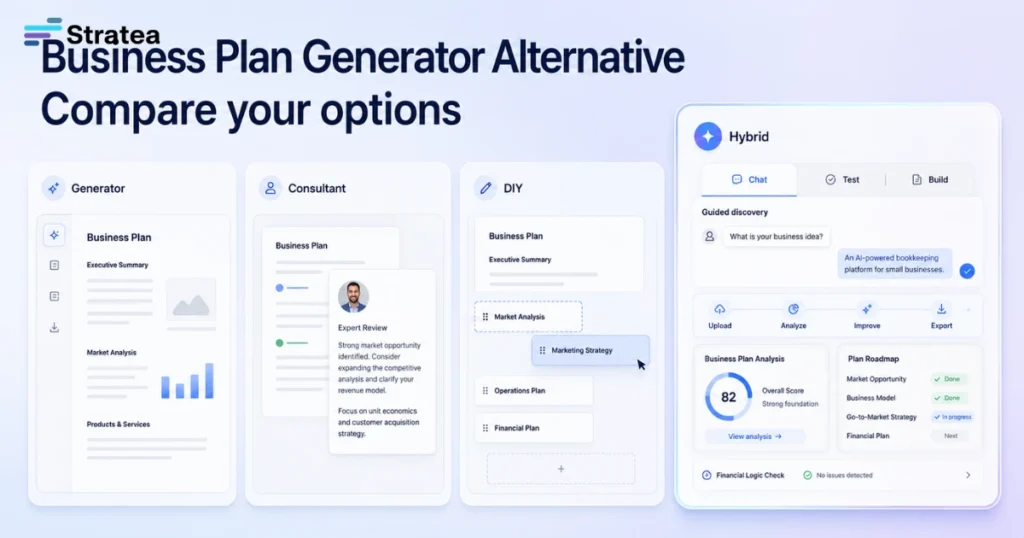
When you search for how to write a business plan, generators dominate the results. Paste your idea, answer a few questions, get an ai business plan in ten pages. For some founders, that’s exactly what they need. For others, a generator misses the point entirely. A business plan generator alternative might be a consultant, a structured template, a mentor-led process, or a guided planning workflow that respects your existing work instead of starting from zero.
What a Generator Actually Does (And What It Doesn’t)
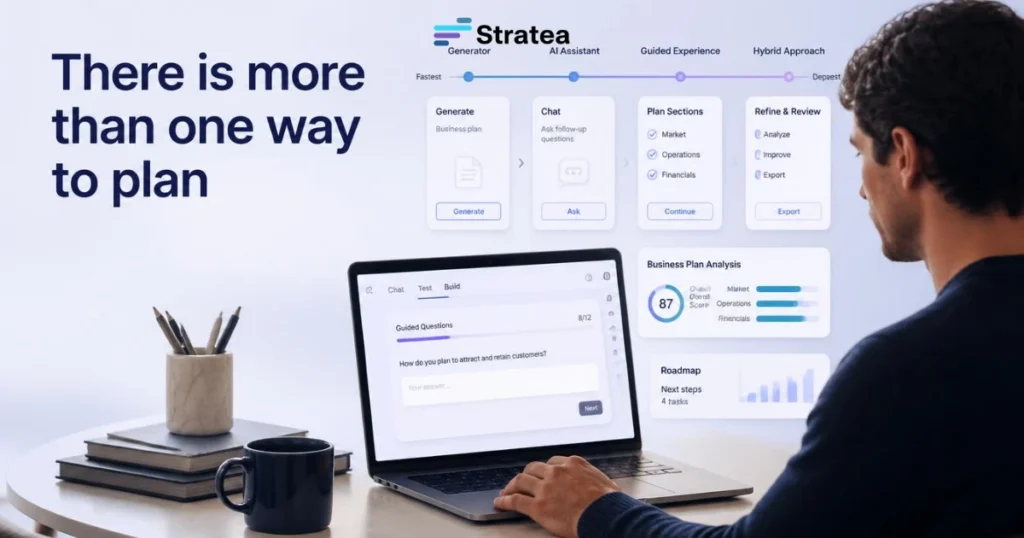
A business plan generator takes the friction out of planning. You input basic details (business type, stage, market), and the tool produces a structured document with standard sections: executive summary, market overview, financial projections, operations plan, go-to-market strategy. It fills in the bones of a plan quickly.
Generators are built on the assumption that all founders need the same structure and depth. The tool asks a fixed set of questions and accepts your answers at face value. If you say your target market is “small businesses,” the generator doesn’t push back on what “small” means or how you’ll actually reach them. It generates text around your input without necessarily making you interrogate whether that text is defensible.
This approach has real value. It removes the blank-page problem. It gives founders a starting point. It works well if you already know your market, have thought through your unit economics, and just need help organizing and writing.
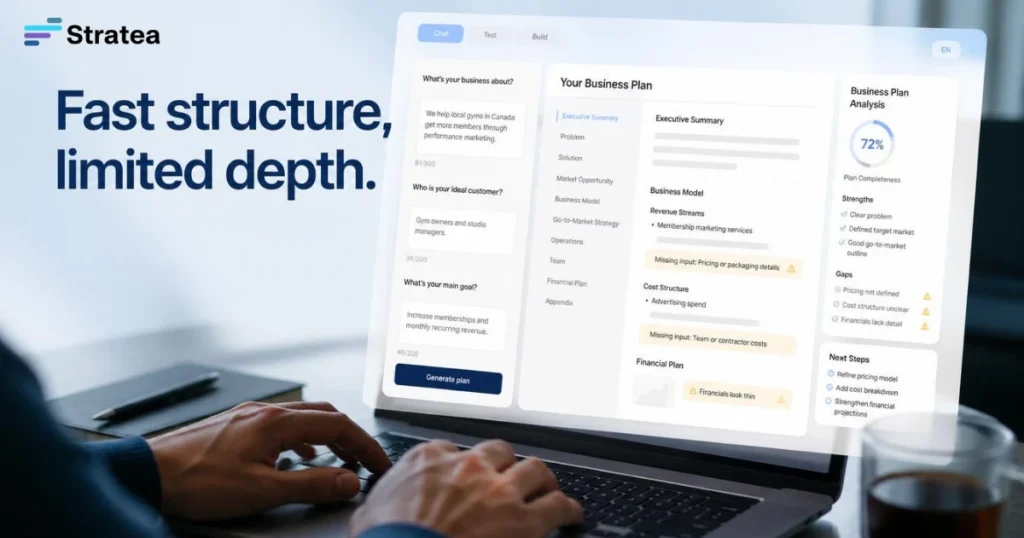
But generators don’t work well if you’re still figuring out your core assumptions. They don’t highlight gaps in your thinking. They don’t adapt if your plan gets torn apart in a pitch meeting and you need to rethink the go-to-market strategy from scratch. They can’t incorporate feedback from an advisor or investor without asking you to start over or paste in a new idea. And they treat your plan like a static document instead of a living record of your evolving thinking.
That’s where the conversation around alternatives begins.
The Full Spectrum of Planning Approaches
Generators aren’t the only way to build a business plan. Understanding the other methodologies helps you pick the one that actually serves your stage and situation.
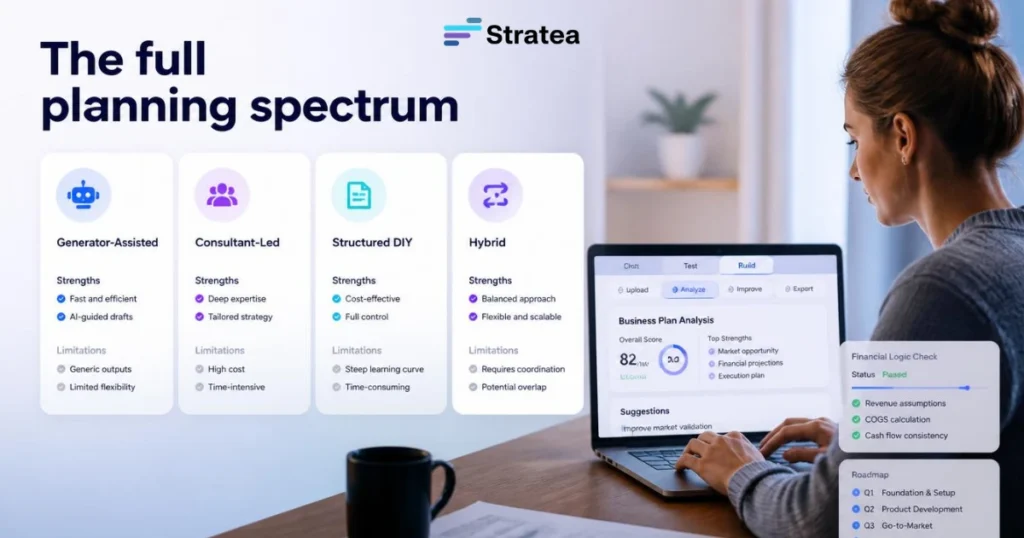
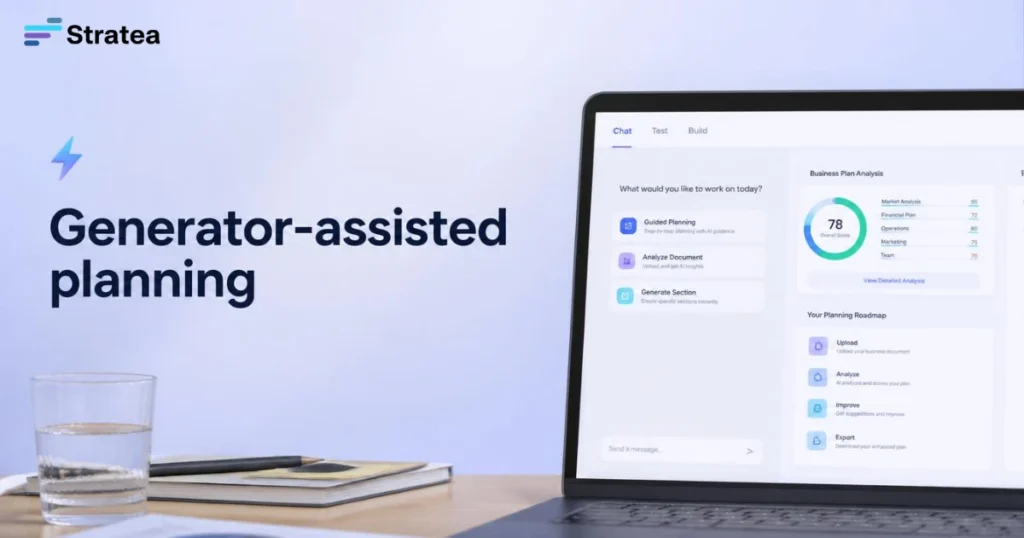
Generator-Assisted Planning (Speed + Structure)
A generator takes your input and produces a draft fast. You typically get a document in minutes to hours. The appeal is obvious: time savings and a professional-looking structure without starting from scratch.
Generators work best when you’ve already done most of the thinking. You know your business model, your customer, your pricing, your first go-to-market moves. You need someone to ask you the questions and organize your answers into a defensible narrative. A generator can do that efficiently.
Generators are riskier when you’re still in discovery mode. If you’re unsure about your real customer or how you’ll reach them, a generator won’t surface that uncertainty. It will generate confident-sounding text based on reasonable guesses. That text might look finished, but it’s not your plan. It’s a template with your numbers plugged in.
Consultant-Led Planning (Expert Guidance + Cost)
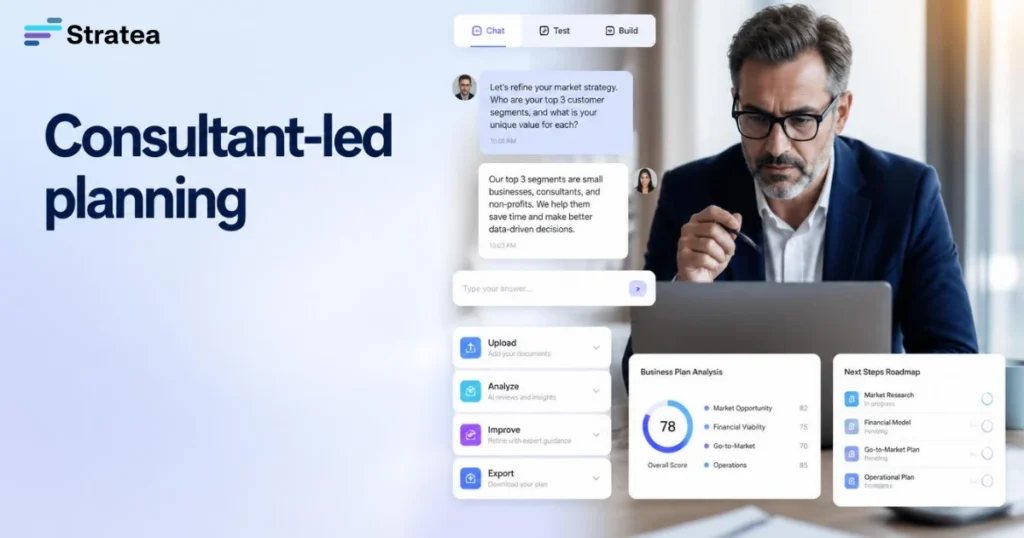
Hiring a business planning consultant or advisor means paying for someone’s judgment and experience. A consultant asks hard questions, pokes holes in your assumptions, challenges your projections, and helps you think through scenarios you haven’t considered.
A consultant works well if you need someone to validate that your thinking is sound or if you’re building a plan for a high-stakes decision: seeking a large loan, pitching investors, or navigating compliance (SBA, visa, Canada Start-up Visa). A consultant brings credibility and can often anticipate what reviewers will ask.
The trade-off is cost and time. Good consultants charge hourly rates ($150 to $300+) or flat fees ($2,000 to $10,000+). The process takes weeks, not hours. It’s not the right choice if you have a tight timeline or a tight budget.
Structured DIY Planning (Ownership + Learning Time)
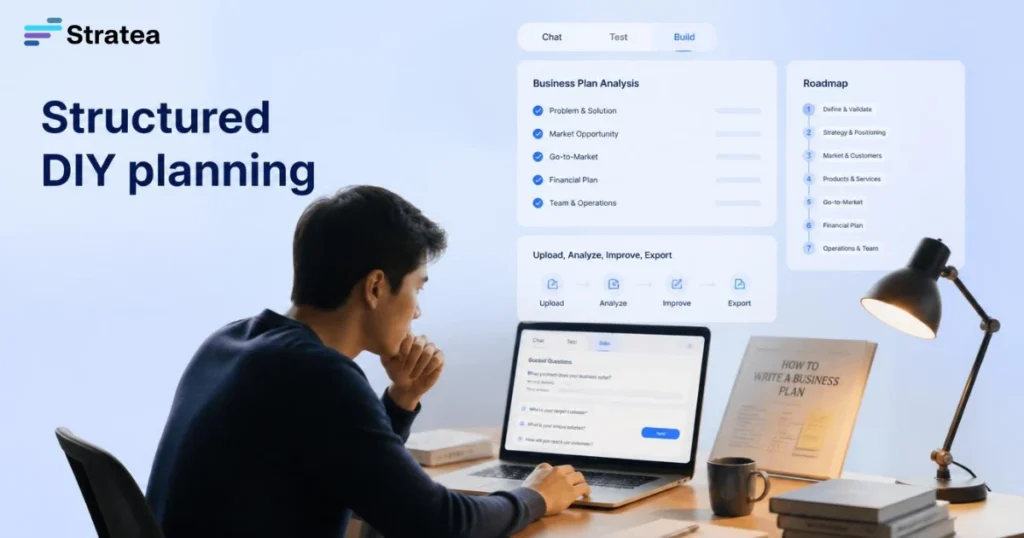
Some founders skip both generators and consultants. They work through a planning framework (lean canvas, business model canvas, a DIY template) on their own or with a co-founder and trusted advisor. This approach is slow and requires discipline, but it forces you to own every assumption.
Structured DIY planning works well if you have time, if you want to deeply understand your business, or if you’re building something unconventional that a generator’s templates don’t accommodate. You learn a lot. Your plan is truly yours.
The risk is that without external feedback, you might miss gaps. You might optimize for what feels right to you instead of what reviewers will actually need. And you might spend months on planning when a generator or consultant could have nudged you toward clarity faster.
Hybrid Approach (Best of Both)
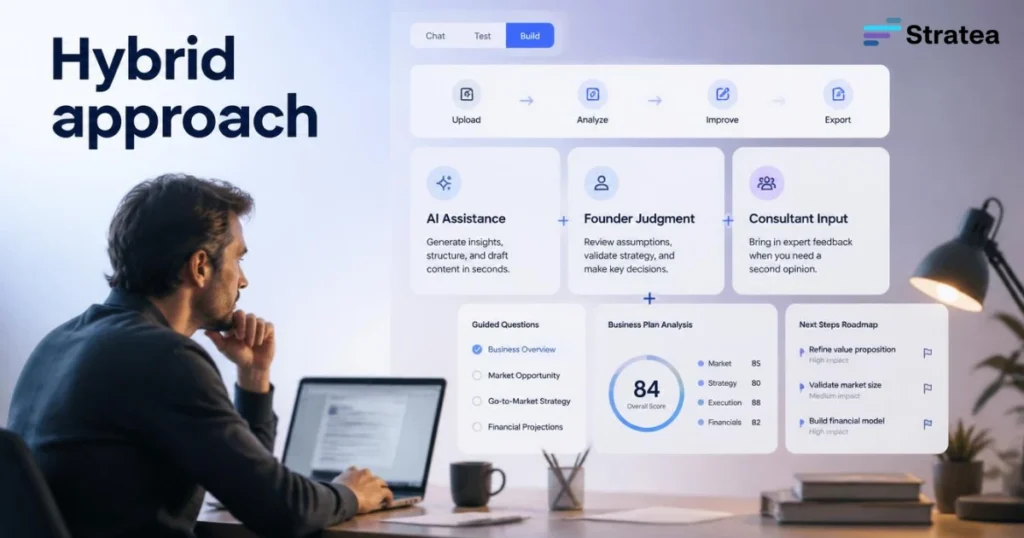
Many founders start with a generator to get a draft structure, then hire an advisor to review and challenge it. Or they build their own framework, then use a generator to structure and write up the findings. Or they work with a consultant to think through the core strategy, then use a generator to write the formal sections.
The hybrid approach is flexible. It lets you control which parts of the process you own and which parts you outsource. It can be faster than pure DIY and cheaper than pure consultant, with more rigor than pure generator.
The risk is managing the handoff between approaches and ensuring the final plan is coherent, not a patchwork of different methodologies and voices.
How to Choose the Right Approach for Your Situation
Different situations call for different planning methodologies.
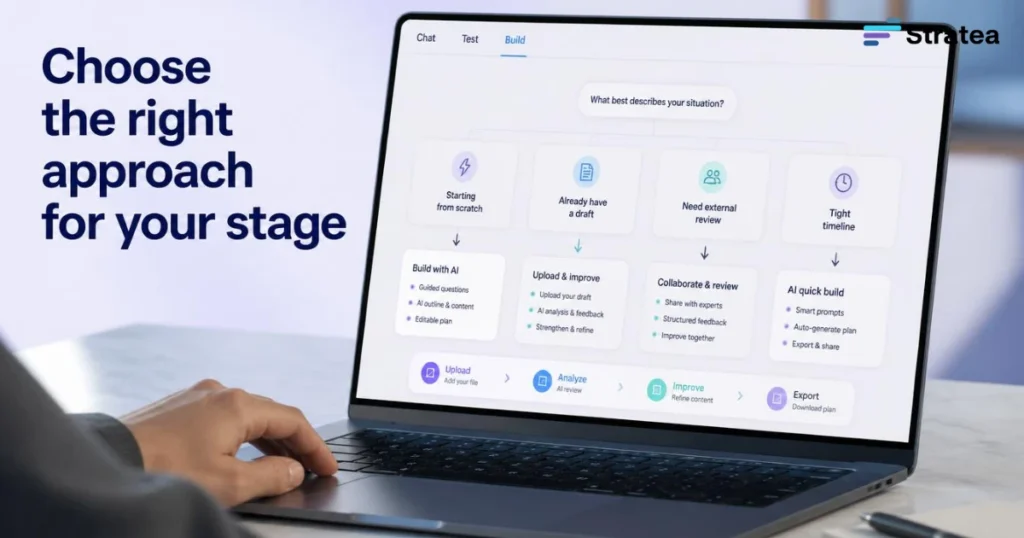
If You’re Starting From Scratch
You have an idea and a rough sense of your market, but no written plan yet.
A generator can help you move from zero to a first draft quickly. The risk is that the draft might look finished when your thinking isn’t. If you use a generator here, treat the output as a starting point, not a final answer. Plan to review each section and ask yourself: “Is this assumption actually true, or did the generator guess?”
A structured DIY approach takes longer but forces you to be explicit about what you know and what you don’t. You might spend two to three weeks building the framework yourself, but you’ll have ownership and confidence in the result.
A consultant makes sense if the stakes are high (you’re seeking a major investment or loan) or if you’re in a complex industry where standard templates don’t fit. The consultant’s guidance is worth the time and cost.

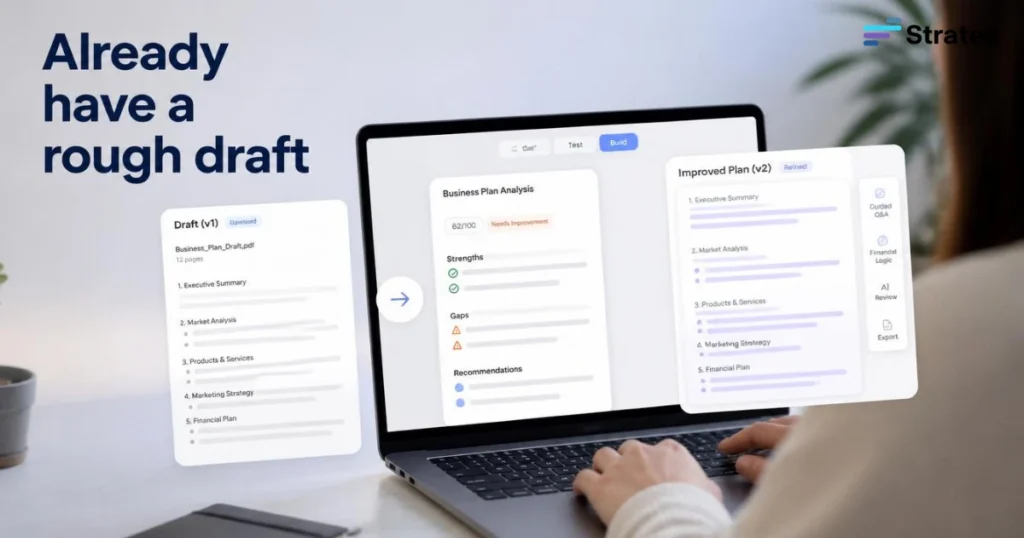
If You Already Have a Rough Draft
You have something on paper or in your head. Maybe it’s a pitch deck, a funding application outline, notes from conversations with advisors, or an Excel spreadsheet with numbers. You don’t need to start from scratch. You need structure and formality.
A generator here is risky because it usually wants you to start over. It doesn’t easily incorporate your existing work. You could paste your draft into a generator and ask it to expand and refine it, but you’ll lose ownership of the process, and you might find the generator’s structure doesn’t match your thinking.
A consultant who specializes in existing-draft review can be very efficient here. You bring your draft, the consultant asks questions to clarify and stress-test your thinking, and you end up with a stronger, more defensible version. This often takes 4-6 weeks and is cheaper than starting from scratch.
A hybrid approach works well: use your existing draft as the foundation, work with a trusted advisor to refine it, then optionally use a tool to format and organize the final version.
If You Need External Credibility (Loan, Investor, Partner Review)
You’re building a plan because someone else needs to review it. A bank is evaluating your SBA loan application. An investor is deciding whether to lead a round. A potential business partner wants to understand your assumptions.
Generators can produce a document that looks professional. But reviewers check whether your numbers are grounded in real thinking, not whether your plan format matches a template. A generator can’t make assumptions defensible. Only you can do that by being explicit about where your numbers come from.
A consultant or advisor review is valuable here because they know what reviewers typically check for and can help you anticipate questions. They can also vouch for your planning rigor, which carries weight.
A structured planning process (whether DIY or guided) that forces you to document assumptions, test them, and explain them is stronger than any polished document a generator produces.
If Timeline Is Your Main Constraint
You need a plan in two weeks or less, and you don’t have budget for a consultant.
A generator is your fastest option. You can produce a draft in hours, refine it over days, and have a complete document within your timeline.
If you have even a little more time (three to four weeks), a hybrid approach might work: use a template or generator to get structure, spend a week stress-testing your assumptions, and refine the draft based on what you learn.
If timeline is tight but stakes are high (you’re pitching investors), it’s worth paying a consultant even on a short timeline. A good consultant can spend two days reviewing your existing work and producing targeted feedback that strengthens your plan significantly.
Worked Example: B2B SaaS Founder with Existing Pitch Deck
Where She Started
Priya had built a B2B SaaS platform for supply chain planning. She’d spent six months raising a pre-seed round and had a polished pitch deck with financial projections, a go-to-market plan, and competitive positioning. Investors liked the idea but told her: “We’d like to see a formal business plan before we move to due diligence.”
Priya’s first instinct was to use a business plan generator. She pasted her idea, uploaded her pitch deck, and the generator produced a 15-page plan in two hours. It looked professional. It included all the standard sections.
Why a Generator Didn’t Feel Right
As Priya reviewed the generated plan, she noticed problems.
The generator had written a market analysis section that cited industry reports about the supply chain software market, estimating a $2.5 billion annual opportunity. Priya’s pitch deck had a different angle. She wasn’t going after the entire market. She was targeting mid-market manufacturers in the Midwest who were frustrated with legacy systems and willing to trial new tools. That’s a much smaller, more defensible target.
The generator’s market section didn’t reflect her actual thinking. It was generic and inflated.
The financial projections in the generated plan showed break-even by year two and profitability by year three. Those numbers came from Priya’s pitch deck, but the generator had added assumptions about headcount growth, infrastructure costs, and customer acquisition that Priya had never explicitly decided on. When she tried to explain the projections to her co-founder, she couldn’t defend half of them.
The go-to-market section was a paragraph long. Priya’s actual plan involved landing five pilot customers from her network, using those to build case studies, and then running a targeted content and LinkedIn campaign to reach similar companies. That narrative didn’t make it into the generated plan.
She realized the generator had turned her strategic thinking into a document that looked finished but didn’t actually represent her plan.
How She Chose a Different Path
Instead of using the generator output, Priya hired a business planning consultant who had worked with B2B SaaS companies. Over two weeks, they did three working sessions.
Session one: The consultant read her pitch deck and asked hard questions about customer specificity, willingness to pay, and realistic customer acquisition costs. Priya realized she’d been vague about her exact early customer list. The consultant pushed her to name five companies she could pitch to and explain why each would be interested.
Session two: They worked through the financial model together. The consultant helped Priya break down customer acquisition cost by channel, calculate realistic customer lifetime value based on Priya’s assumptions about churn and upsell, and build projections that matched her go-to-market plan. By the end, Priya understood every number in her plan.
Session three: They organized Priya’s thinking into a formal business plan structure, with sections on market opportunity, competitive positioning, product roadmap, go-to-market strategy, financial projections, and team. The consultant’s guidance kept the plan focused and defensible.
The final plan was shorter than the generator output but significantly stronger. Every section reflected Priya’s actual thinking. She could explain every assumption. When investors asked questions during due diligence, she had coherent answers because she understood the logic behind her plan.
Would a generator have worked faster? Yes, by about 10 days. But the consultant’s guidance meant Priya had a plan she actually understood and could defend. That mattered more than speed for a founder raising venture capital.

Hidden Costs and Trade-Offs Nobody Mentions
Each planning approach has costs that aren’t obvious upfront.
Generator cost: Rework. You get a fast draft, but it often needs revision. You discover assumptions you don’t agree with, sections you need to rewrite, or structures that don’t match your actual business. That revision work adds time you didn’t budget for.
Consultant cost: Money and access. You pay upfront ($2,000 to $10,000 for a multi-week engagement). You also need to be available for the process. If you’re juggling a startup, finding the time for consultant meetings can be hard.
DIY cost: Time and risk of gaps. You’re not paying money, but you’re investing weeks of your own time. You also risk building a plan that looks good to you but has blind spots an external reviewer would catch.
Hybrid cost: Coherence. If you split the planning process across multiple approaches, you risk ending up with a plan that’s disjointed or that combines incompatible assumptions from different stages of your thinking.
The real question is which trade-off serves you best. If you have time but limited budget, DIY or hybrid might be optimal. If you have budget but no time, a consultant might be worth it. If your thinking is already clear, a generator might be enough.
FAQ
Q: Is a business plan generator alternative always better than a generator?
A: No. A generator is the right choice if you’ve already done most of the thinking and just need someone to organize and write it up. If your assumptions are clear and you’re confident in your numbers, a generator will save you time. An alternative approach (consultant, guided discovery, structured DIY) makes more sense if your thinking is still evolving, you need external validation, or you already have work you want to build on instead of starting over.
Q: Can I use a generator as a first draft and then improve it with a consultant or guided planning?
A: Yes. That’s a legitimate hybrid approach. Use the generator to get a structure, then have someone review it and challenge the assumptions. You’ll likely need to rewrite significant sections, so you’re essentially paying for a generator draft that gets heavily revised. Sometimes that’s more efficient than starting from scratch with an advisor.
Q: How much does it cost to hire a business planning consultant?
A: Consultant costs vary widely. Some charge hourly ($150 to $300+ per hour), others charge flat fees ($2,000 to $10,000 for a full planning engagement), and some charge project-based rates ($5,000 to $20,000+ for complex plans or multiple rounds of revision). Look for consultants who specialize in your industry or funding stage. Get clarity upfront on what’s included and how many revision rounds you get.
Q: If I have a rough plan already, do I really need to formalize it?
A: It depends on whether you need to present it to someone else. If your plan is for internal clarity only, rough is fine. If a lender, investor, or partner will review it, you need a formal version that shows coherent thinking. You don’t need to rewrite everything from scratch, but you do need clear sections, grounded assumptions, and a narrative that holds together.
Q: Should I try a generator first and then upgrade to a consultant if it’s not working out?
A: It can work, but generators often aren’t designed for easy hand-off to a consultant. You might end up rewriting the whole thing anyway. If you know upfront that you’ll need expert guidance (because you’re raising capital, need a loan, or have high stakes), it’s often more efficient to start with a consultant or advisor than to generate a draft you’ll end up replacing.
Q: What should a business plan alternative focus on if a generator does the document writing?
A: Assumption clarity and defensibility. Whether you use a generator, a consultant, a template, or guided discovery, the output should let you explain where every number came from, what you’re confident about, what you’re uncertain about, and how you’d adjust your plan if your key assumptions turn out to be wrong. That thinking is what reviewers actually check for.
Next Steps
Choosing a planning methodology is the first decision. You’ve now seen the full spectrum: generators, consultants, DIY frameworks, and hybrid approaches. Your choice depends on where you’re starting, what timeline you have, and what outcome matters most.
If you already have thinking to document and you want guided structure instead of a generator formula, Start Strategic Discovery with STRATEA. You’ll work through the logic of your business, refine your assumptions, and emerge with a plan you actually understand.
If you’re starting from scratch and budget or timeline is tight, a generator might be your fastest option.
If stakes are high and thinking is unclear, a consultant who understands your industry is worth the investment.
STRATEA is free to start. Bring your draft, your rough idea, or your existing pitch deck, and see where your planning actually needs work.